
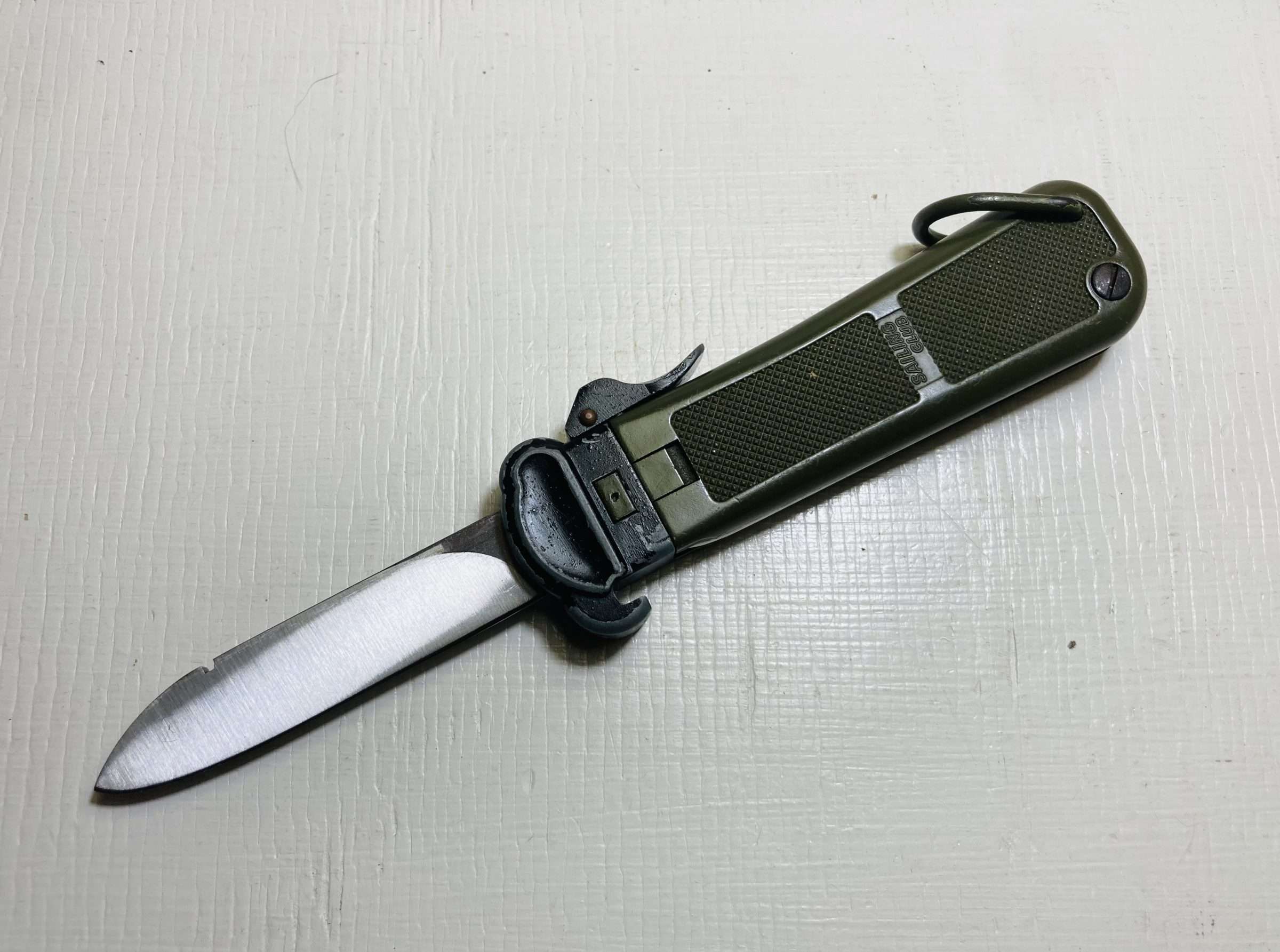
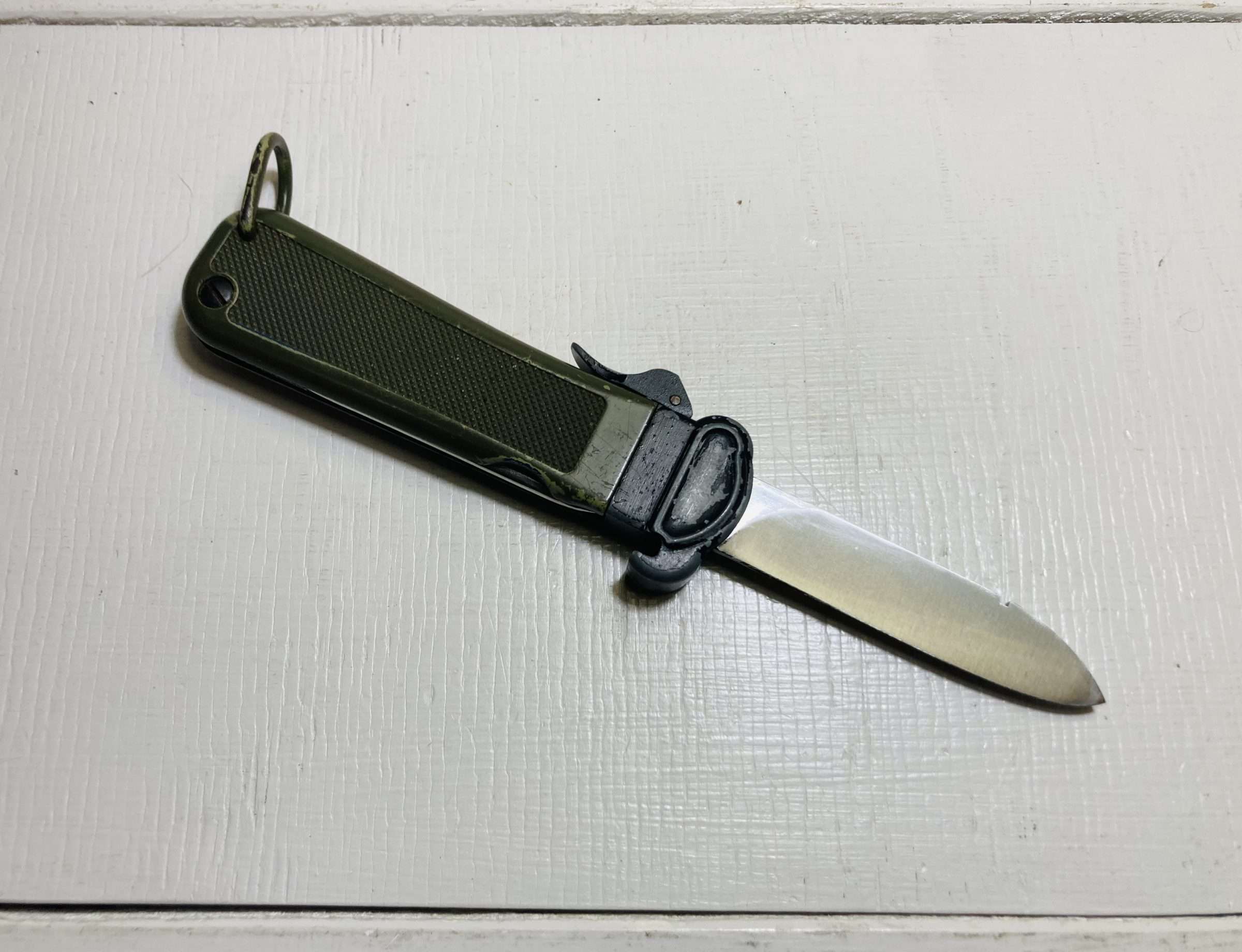
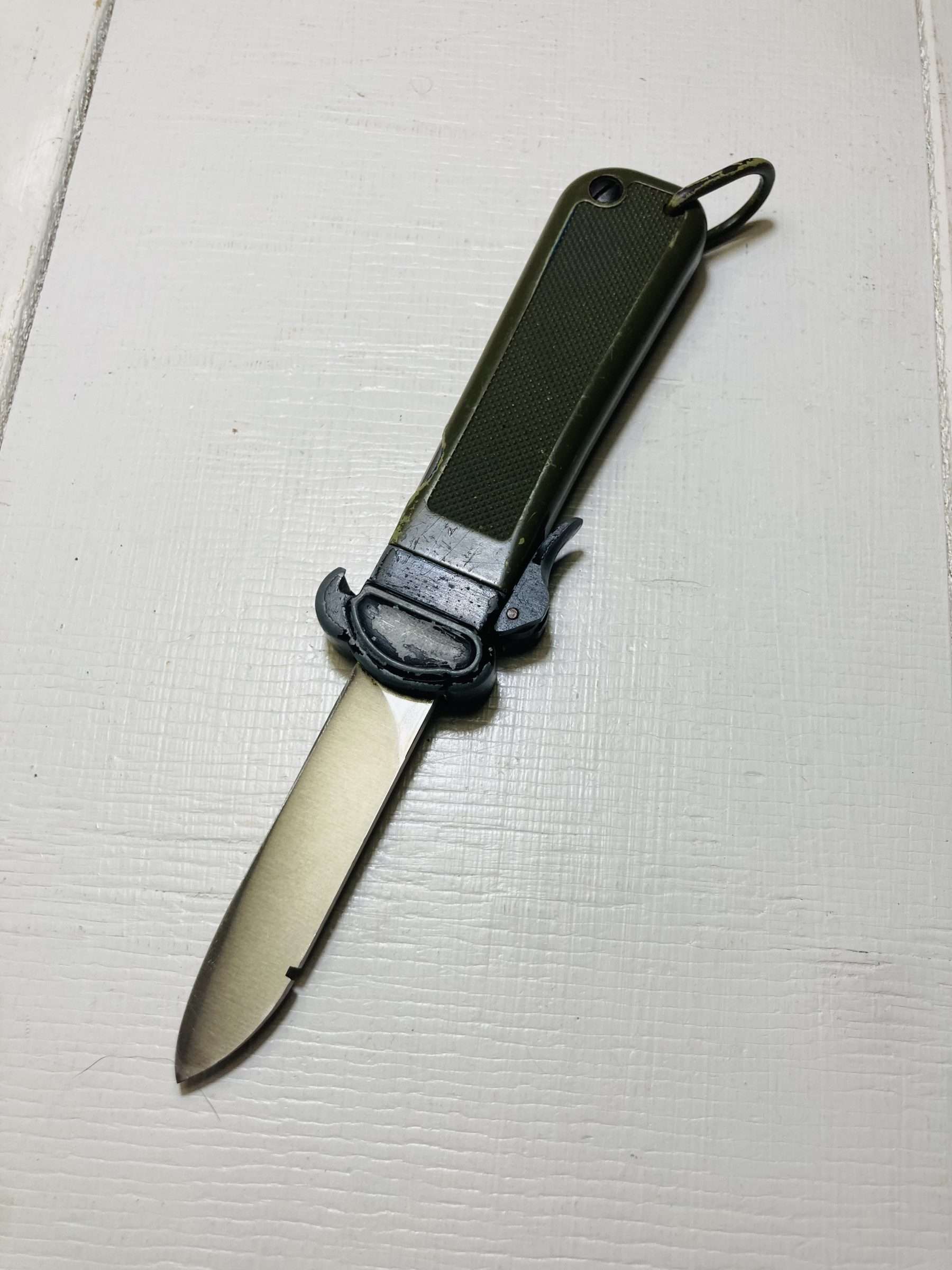
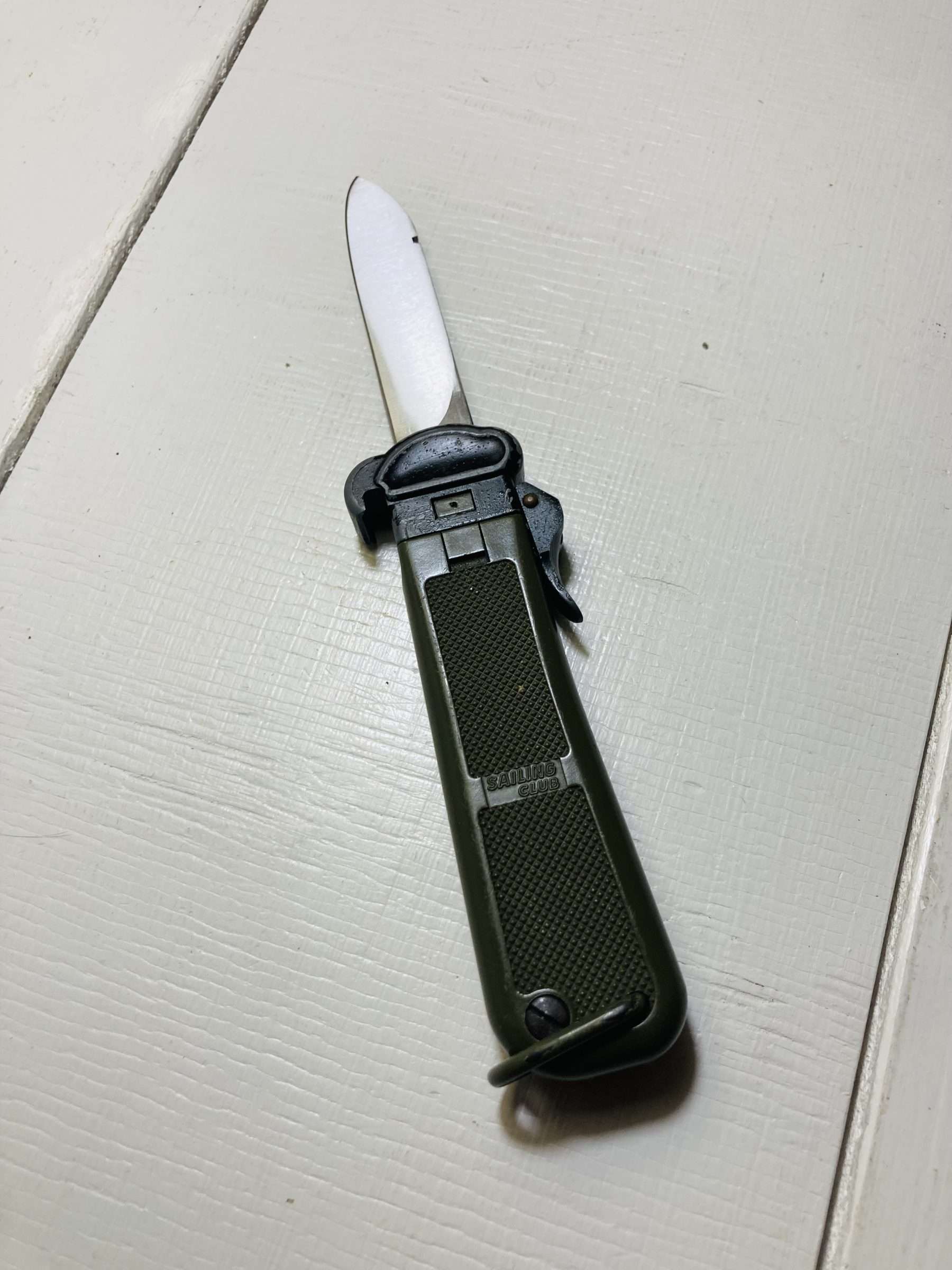
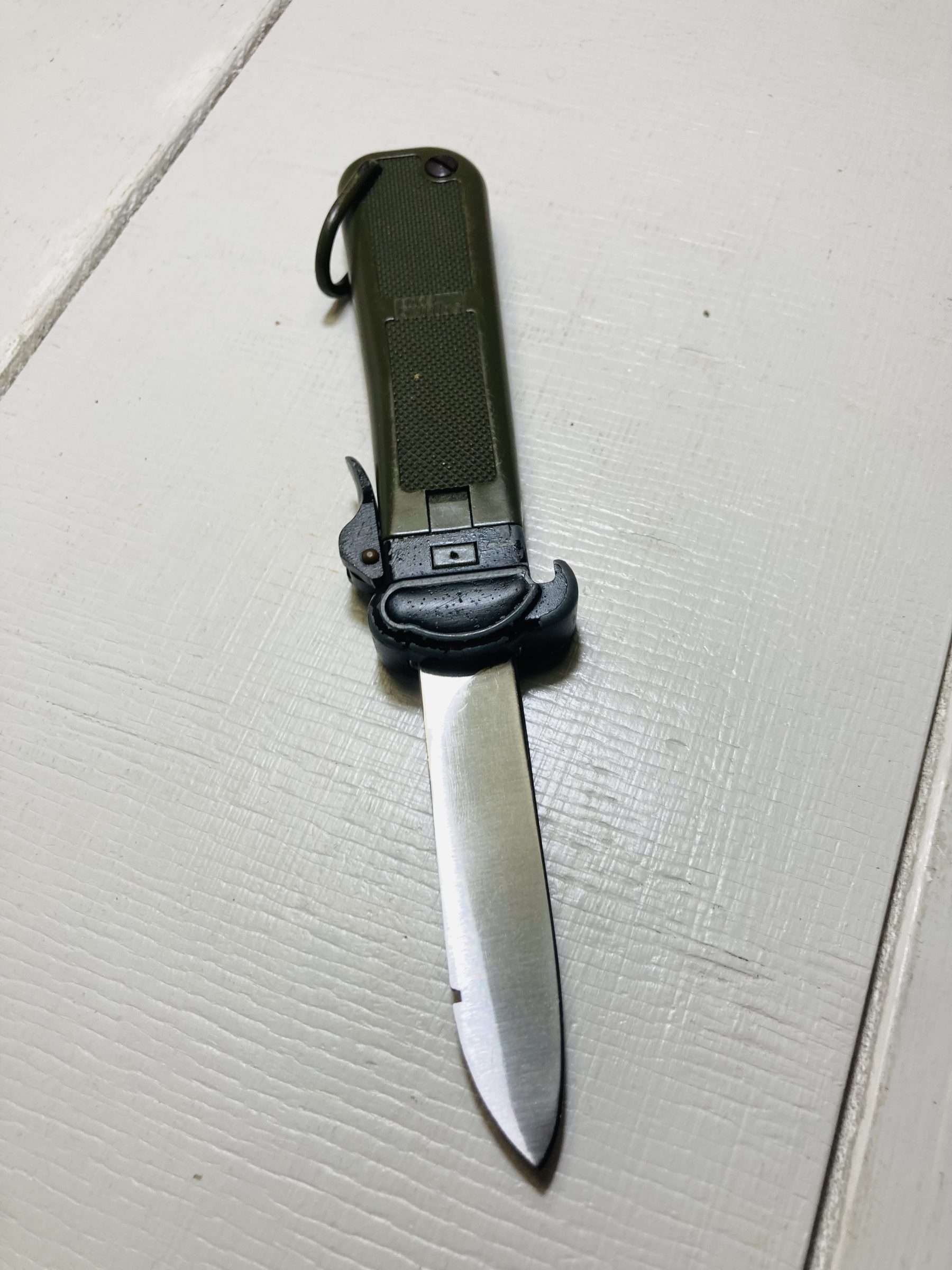
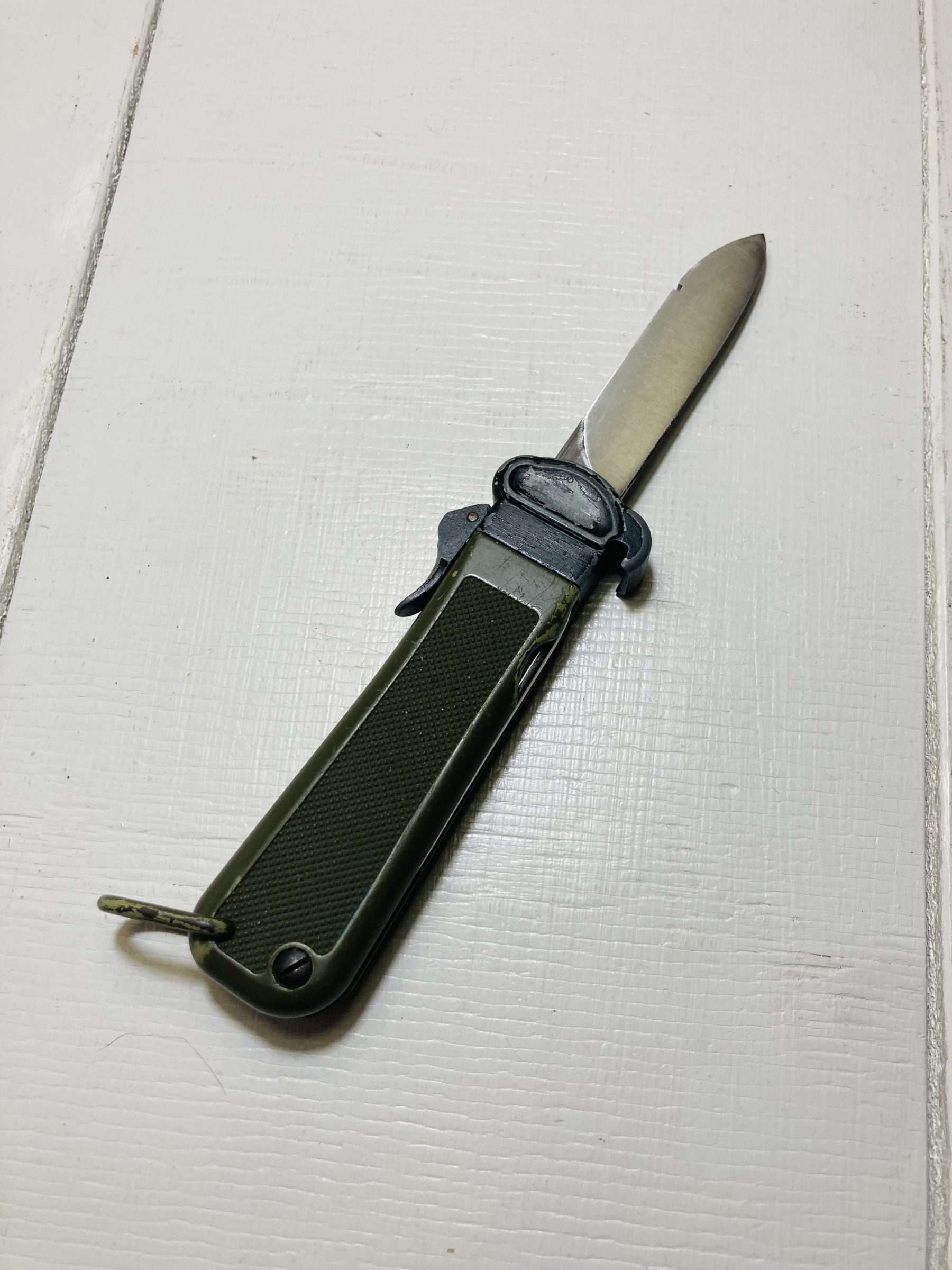
Description
Post-war German paratrooper gravity knives produced during the Cold War era (commonly 1970s–1980s) were directly based on the original WWII Luftwaffe Fallschirmjäger-Messer design first introduced in 1937 for German airborne troops. 
Like their wartime predecessors, these knives were issued primarily as emergency rescue and utility tools, intended to allow paratroopers to cut themselves free from tangled parachute shroud lines or harness webbing using one hand if the other arm was incapacitated. 
The defining gravity-operated mechanism allows the blade to deploy by pointing the knife downward and releasing the side lever — enabling the blade to slide out of the handle under gravity alone before locking into place. This system is fundamentally different from a switchblade, as there is no spring-assisted deployment; the blade travels solely by inertia or gravity. 
Original WWII examples featured wooden grip scales, while later Bundeswehr-issued versions manufactured between the 1970s and mid-1980s (by firms such as Eickhorn, WMF, and OFW) adopted more durable polymer handles while retaining the same sliding OTF blade design and folding marlinspike for cutting or untying rigging. 
These later-production gravity knives represent the evolution of the wartime pattern into modern military service — remaining in Bundeswehr use for decades due to their reliability and simple one-handed operation.
⸻
Specifications (typical):
• Blade Length: Approx. 4 inches
• Overall Length: Approx. 10–10.5 inches
• Mechanism: Gravity-operated sliding blade
• Locking System: Lever-release lock
• Secondary Tool: Folding marlinspike / rigging spike
• Handle: Polymer (post-war models)
• Origin: West Germany
• Era: Circa 1970s–1980s
• Pattern: WWII Fallschirmjäger-Messer inspired
⸻
Important:
• Buyer must be 18 years or older.
• International shipping available at buyer’s own risk and subject to local laws.


